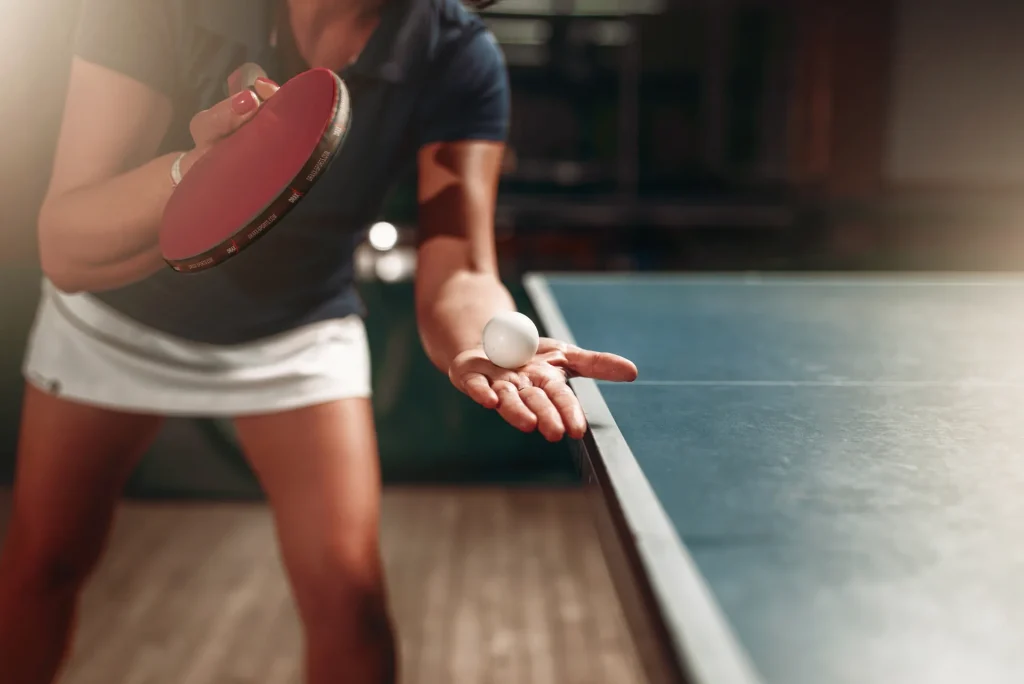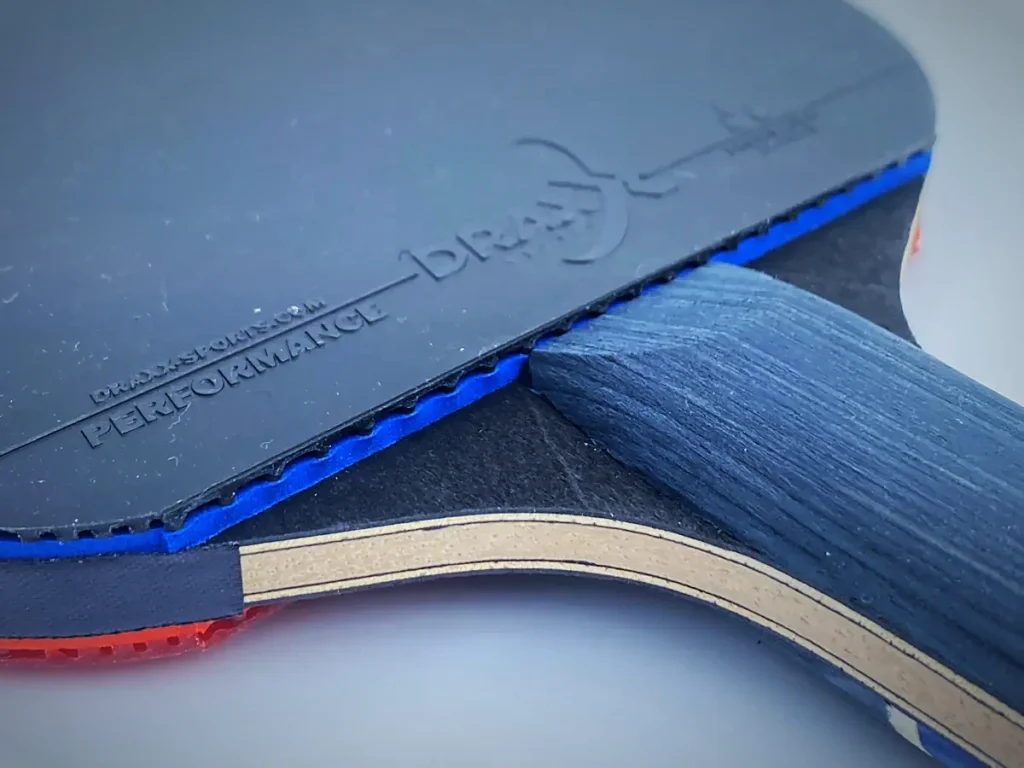
Over the course of a session, the rubber surface picks up dust, sweat and fingerprints. The result: the ball grips less, spin weakens, and you start doubting your technique when it’s actually the bat asking for a little care. The routine below takes two minutes and makes your rubbers last considerably longer.
Clean at the end of every session
Take a soft sponge or a microfibre cloth, lightly dampened with clean water or with a cleaner designed for rubbers. Wipe each side in small circles, from the centre towards the edges, without pressing. Then let it air-dry for a few minutes before putting it away.
- Avoid alcohol, household products and scented wipes: they dry out the rubber and ruin its grip.
- Don’t wipe the bat with your hand or your shirt: skin oil and fibres stay on the surface.
- During breaks, hold the bat by the handle and keep your fingers away from the rubbers.
Protect and store
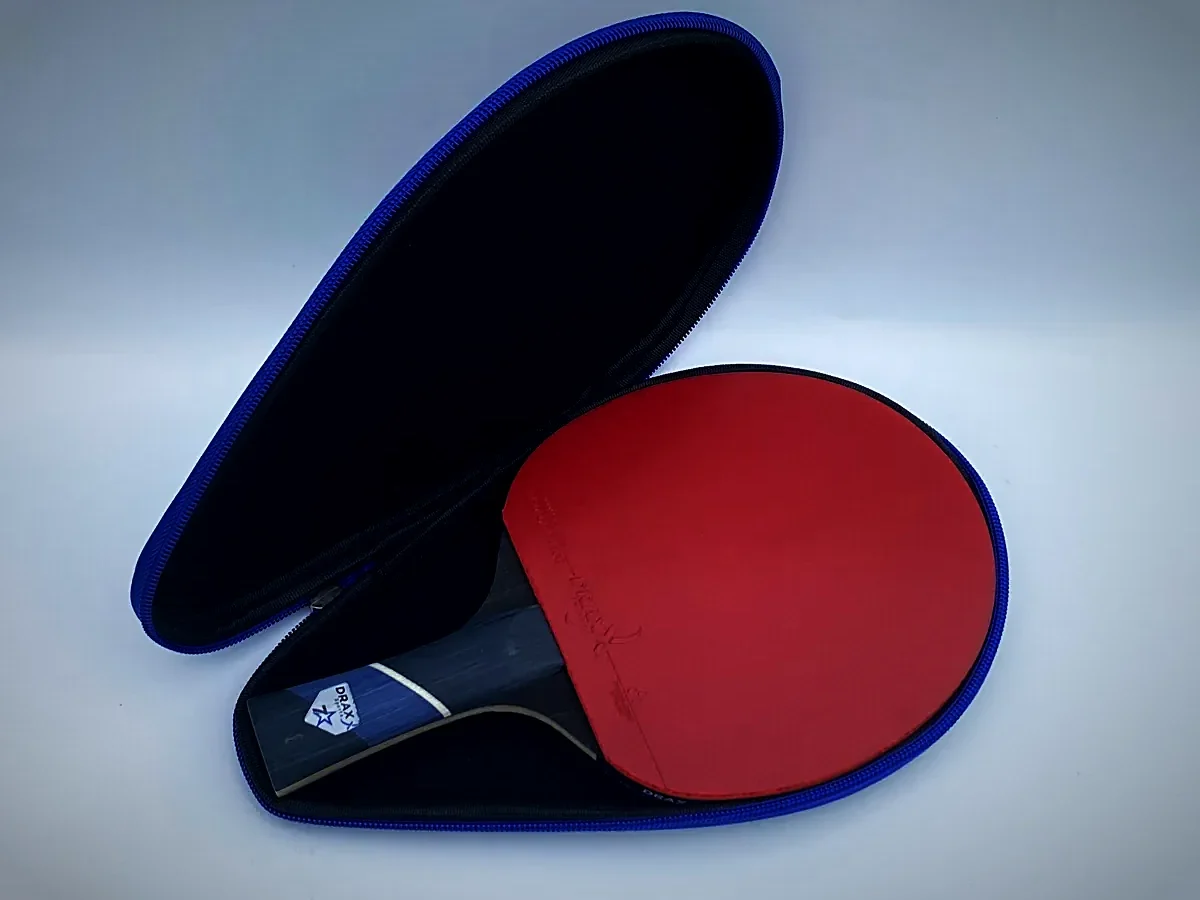
Once the surface is dry, apply a protective film to each side: it limits oxidation and dust build-up. Then slide the bat into its case, which also protects the edge of the blade from knocks against the table.
Watch out for heat: a bat left in the sun in a car or next to a radiator will see its glue and sponge deteriorate. Store it at room temperature, away from direct light.
Knowing when to change your rubbers
For a player who trains two or three times a week, an attacking rubber loses some of its grip within a few months. Signs to look out for:
- the ball slides instead of being brushed, on topspins as well as serves;
- the hitting area becomes smooth, shiny or faded;
- the edges crumble or peel away;
- the bounce feels softer, or differs from one area to another.
The blade, on the other hand, can last for years if it’s looked after: only the rubbers need replacing. Regluing is done with water-based glue, as solvent-based glues are banned in competition.
The following section is reserved for club members.
Free registration in 20 seconds: complete exercises, challenge of the month, previews and -5 % on your first order.